Samuel Smiles
Author · 1812–1904Scottish author and reformer whose Self-Help (1859), full of stories of perseverance, became one of the best-selling books of its century.



















































Samuel Smiles
Author · 1812–1904 · Author of Self-Help
Scottish author and reformer whose Self-Help (1859), full of stories of perseverance, became one of the best-selling books of its century.
- Quotes
- 88
- Vale lines
- 179
Reimagined by August Vale
179 new lines Vale wrote after Samuel Smiles and another thinker. Tap one to see both originals.
Choose your five people like you are choosing your future, because you are.
Every city hums one ambition. Live where the hum sounds like you.
Build your career on a skill, not a boss. Bosses get transferred.
A good nurse notices the untouched breakfast before the chart does.
You learn more about someone on their sick day than on their wedding day.
Live only in your head and you’re a big house with one lit room.
Money is a pair of gloves. You can pick up anything and feel almost none of it.
A tight budget teaches you what you love. A loose one only teaches you what’s available.
Small fees are termites. Nobody notices them until the floor gives.
Money is one kind of power. It’s just the only kind that runs out when you use it.
Squirrels don’t call it discipline. They just believe in winter.
Everyone can wait at a red light. The trick is waiting when you can’t see the signal.
There’s no such thing as spare time. Only time nobody has claimed yet.
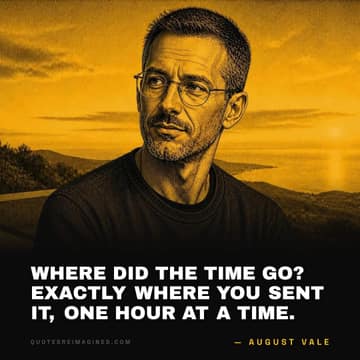
Where did the time go? Exactly where you sent it, one hour at a time.
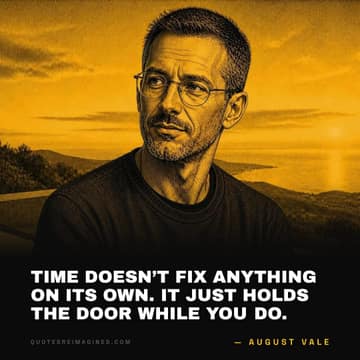
Time doesn’t fix anything on its own. It just holds the door while you do.
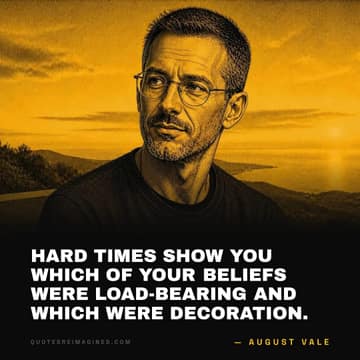
Hard times show you which of your beliefs were load-bearing and which were decoration.
An expert’s eye isn’t sharper. It just knows where to look first.
Copy down every word of the lecture and you leave with a transcript, not a skill.
Most great laboratories were sheds with a stubborn person inside.
The hardest lesson for a gifted student is how to be bad at something.
The best craftsmen are suspicious of compliments and curious about complaints.
Every craft has its tricks. Mastery is knowing when to leave them in the drawer.
Give a little before you have enough, or you’ll never recognize enough when it shows up.
Independence starts small: a meal you can cook, a hinge you can fix, an evening you can spend alone.
The richest man at the reunion is rarely the one everybody’s glad to see.
Fix it yourself once and you’ll own it in a way no receipt can manage.
Give your money a job, your time a purpose and your wants a curfew.
Childhood is built from a thousand ordinary Saturdays, not one big holiday.
Fight in front of the kids if you must. Then make up in front of them too.
One day your father’s sentence will come out of your mouth. Hope it’s one of his good ones.
Let kids pay for part of the bike. They’ll lock it every time.
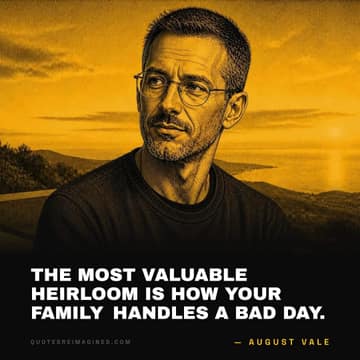
The most valuable heirloom is how your family handles a bad day.
A sincere compliment never misses. Sometimes it just lands years later.
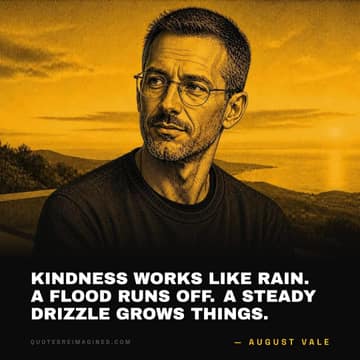
Kindness works like rain. A flood runs off. A steady drizzle grows things.
Kindness doesn’t need a big stage. The checkout line will do.
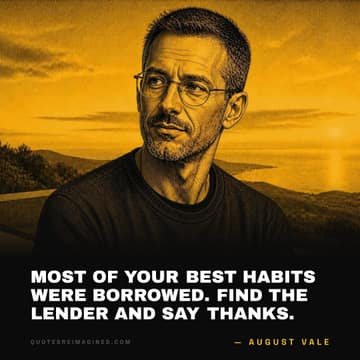
Most of your best habits were borrowed. Find the lender and say thanks.
Talent gets you the first call. Reliability gets you the second.
Walking was the hardest skill you ever learned. You just don’t remember the falls.
Boredom usually isn’t a warning. It’s the sound of a habit settling in.
Boring, repeated, for years. That’s the whole secret, and it’s why it stays one.
Limping still counts as walking. Keep the direction and forget the style.
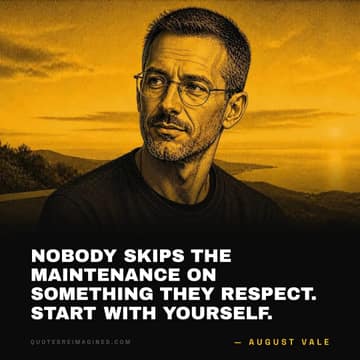
Nobody skips the maintenance on something they respect. Start with yourself.
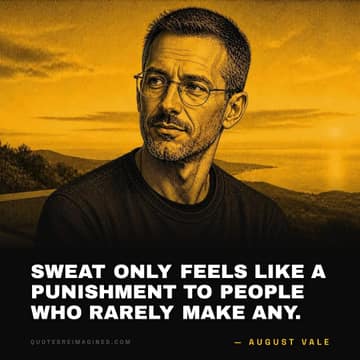
Sweat only feels like a punishment to people who rarely make any.
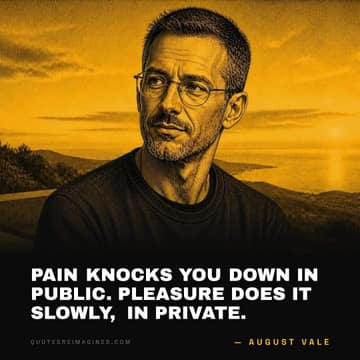
Pain knocks you down in public. Pleasure does it slowly, in private.
Health can usually be won back. The years spent ignoring it can’t.
Train out of respect, not fear. Fear quits the day the test comes back clean.
Sleeping in on Saturday is jet lag you didn’t even travel for.
Will doesn’t replace training. It decides whether the training happens.
The first ten minutes of a run are a liar. Every runner learns to wait them out.
Every habit is heavy for a while, then it starts carrying you.
Statues collect pigeons. Good advice collects grandchildren.
Forgotten isn’t wasted. Most good days end up in the foundation, not the photo album.
Every family has a saying nobody can trace back. Try to become one.
Pick your boss the way you’d pick a teacher, because that’s what they’ll be.
Some people warm a room just by walking in. That’s a skill, not a gift.
Praise people behind their backs. It always finds its way around to the front.
Children don’t respect the title. They respect the person wearing it on a hard day.
Most people run their love life on a copy of their parents’ manual, lightly edited.
Whatever you were given, someone younger is watching what you do with it.
One good marriage in the family does more than a shelf of advice.
Love with what you have. Waiting until you have more is how years go missing.
Soft hands mean more when everyone knows they could make a fist.
You’ll never know which small kindness was someone’s whole day.
A full bookshelf proves you shop. Only the margins prove you read.
Studying ethics makes you good the way reading menus makes you full.
Some of the wisest people you’ll meet learned it with their hands.
Wisdom is a slow drip. Most people never leave the tap on long enough.
Real conviction finds fuel in a tank that tiredness swore was empty.
Lose everything but your nerve and you’re still in business.
Flattery is wrong on purpose. Criticism is only wrong by accident.
Take away your worst year and you’d have to give back who you became.
Bitterness is usually a hope that was left out too long and turned.
The scoreboard says who won. The mirror says whether you did.
Money is a language. Most people only ever learn one word: more.
Looking down on honest work is a habit learned from people who never had to do any.
Love for the work usually arrives after skill does. Stay for the introduction.
Sell one thing you made and you’ll understand money better than any book explains it.
Children learn love from how you speak to the people you’re tired of.
Work like luck doesn’t exist. Talk like it did half the job.
The boring business on the corner outlives most of the exciting ones.
Someone can lend you a ladder. Nobody can lend you the legs.
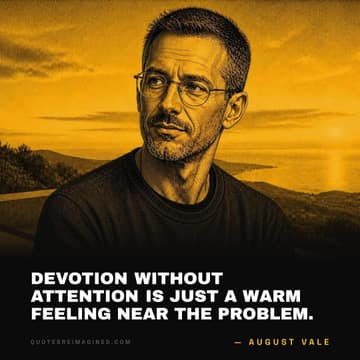
Devotion without attention is just a warm feeling near the problem.
Nobody becomes great by accident. Plenty become ordinary that way.
Rank tells people where to stand. Character tells them whether to stay.
Launch day is the least important day of anything you’ll build.
Count your age in hours well used and some twenty-five-year-olds are older than their grandparents.
You can always have the thought again. You can’t have the afternoon again.
A free hour spent scrolling isn’t leisure. It’s a commute to nowhere.
You can hire someone else’s hours. You can never rehire one of your own.
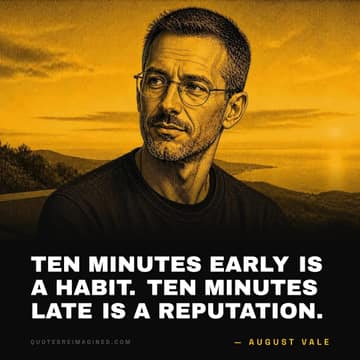
Ten minutes early is a habit. Ten minutes late is a reputation.
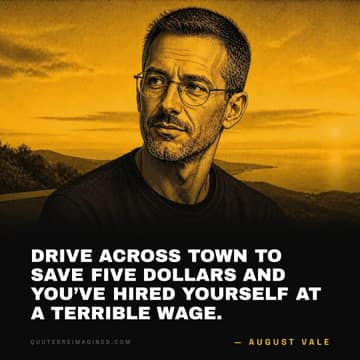
Drive across town to save five dollars and you’ve hired yourself at a terrible wage.
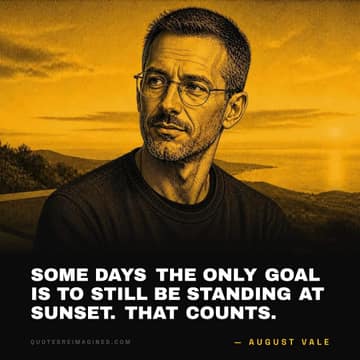
Some days the only goal is to still be standing at sunset. That counts.
Before you name a leader, notice who everyone already goes to with questions.
The fastest way to earn trust is to keep a promise nobody would have noticed you broke.
Trust the person who gives the same answer to the boss and the intern.
Apologize to a child once and you’ll teach more manners than a year of lectures.
History’s best work was mostly done by people checking the price of bread.
Early on, take your pay in lessons. They compound faster than salary.
Waiting for a bigger paycheck to start saving is how small paychecks stay small.
Leave your kids your habits. Money alone tends to get spent.
Living beyond your means is a lie told in monthly installments.
An heirloom is worth exactly as much as the stories that come with it.
A raise you don’t spend is the only kind that stays a raise.
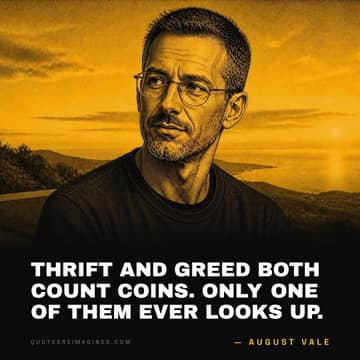
Thrift and greed both count coins. Only one of them ever looks up.
Your parents stopped checking your allowance. Someone still has to.
A thin wallet writes a short list, and short lists get done.
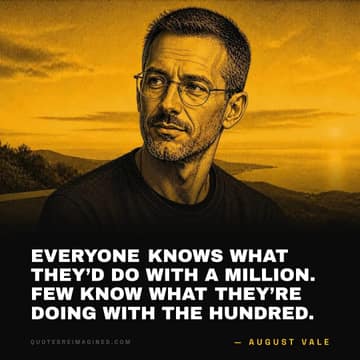
Everyone knows what they’d do with a million. Few know what they’re doing with the hundred.
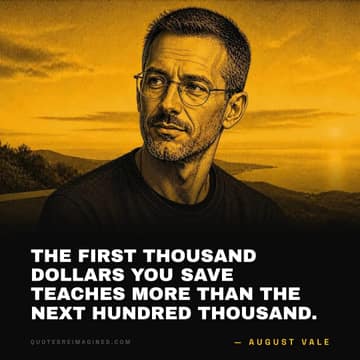
The first thousand dollars you save teaches more than the next hundred thousand.
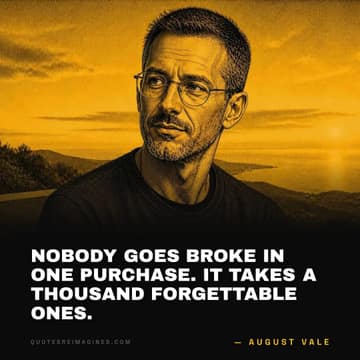
Nobody goes broke in one purchase. It takes a thousand forgettable ones.
The thrifty can afford to be generous. The careless can only afford excuses.
In Samuel Smiles’s own words
THE crown and glory of life is Character.
Lost wealth may be replaced by industry, lost knowledge by study, lost health by temperance or medicine, but lost time is gone for ever.
It is not ease, but effort—not facility, but difficulty, that makes men.
The battle of life is, in most cases, fought up-hill; and to win it without a struggle were perhaps to win it without honour. If there were no difficulties there would be no success; if there were nothing to struggle for, there would be nothing to be achieved.
Without the necessity of encountering difficulty, life might be easier, but men would be worth less.
Fortune has often been blamed for her blindness; but fortune is not so blind as men are. Those who look into practical life will find that fortune is usually on the side of the industrious, as the winds and waves are on the side of the best navigators.
We learn wisdom from failure much more than from success. We often discover what will do, by finding out what will not do; and probably he who never made a mistake never made a discovery.
The true character acts rightly, whether in secret or in the sight of men.
Self-Help80 quotes
Every man is bound to aim at the possession of a good character as one of the highest objects of life.
The poor man with a rich spirit is in all ways superior to the rich man with a poor spirit.
Only the poor in spirit are really poor. He who has lost all, but retains his courage, cheerfulness, hope, virtue, and self-respect, is still rich.
The highest object of life we take to be, to form a manly character, and to work out the best development possible, of body and spirit—of mind, conscience, heart, and soul.
The greatest slave is not he who is ruled by a despot, great though that evil be, but he who is the thrall of his own moral ignorance, selfishness, and vice.
Every man ought so to contrive as to live within his means. This practice is of the very essence of honesty.
The men of mark in society—the guides and rulers of opinion—the really successful and useful men—are not necessarily rich men; but men of sterling character, of disciplined experience, and of moral excellence.
The habit of application becomes easy in time, like every other habit.
HOW a man uses money—makes it, saves it, and spends it—is perhaps one of the best tests of practical wisdom.
The building of all the houses, the mills, the bridges, and the ships, and the accomplishment of all other great works which have rendered man civilized and happy, has been done by the savers, the thrifty; and those who have wasted their resources have always been their slaves.
The youth who inherits wealth is apt to have life made too easy for him, and he soon grows sated with it, because he has nothing left to desire.
Nothing can be more hurtful to a youth than to have his soul sodden with pleasure.
Nothing can compensate for the loss of hope in a man: it entirely changes the character.
The mind may accumulate large stores of knowledge without any useful purpose; but the knowledge must be allied to goodness and wisdom, and embodied in upright character, else it is naught.
Good rules may do much, but good models far more; for in the latter we have instruction in action—wisdom at work.
True courage and gentleness go hand in hand. The brave man is generous and forbearant, never unforgiving and cruel.
The very greatest men have been among the least believers in the power of genius, and as worldly wise and persevering as successful men of the commoner sort.
It is the close observation of little things which is the secret of success in business, in art, in science, and in every pursuit in life.
Time should not be allowed to pass without yielding fruits, in the form of something learnt worthy of being known, some good principle cultivated, or some good habit strengthened.
In humble life nothing can be more cheering and beautiful than to see a man combating suffering by patience, triumphing in his integrity, and who, when his feet are bleeding and his limbs failing him, still walks upon his courage.
On the whole, it is not good that human nature should have the road of life made too easy.
An hour wasted daily on trifles or in indolence, would, if devoted to self-improvement, make an ignorant man wise in a few years, and employed in good works, would make his life fruitful, and death a harvest of worthy deeds.
In the school of labour is taught the best practical wisdom; nor is a life of manual employment, as we shall hereafter find, incompatible with high mental culture.
For character is itself a fortune; and if the high-principled man will but hold on his way courageously, success will surely come,—nor will the highest reward of all be withheld from him.
The object of knowledge should be to mature wisdom and improve character, to render us better, happier, and more useful; more benevolent, more energetic, and more efficient in the pursuit of every high purpose in life.
A life well spent, a character uprightly sustained, is no slight legacy to leave to one’s children, and to the world; for it is the most eloquent lesson of virtue and the severest reproof of vice, while it continues an enduring source of the best kind of riches.
The fervent spirit is always a healthy and happy spirit; working cheerfully itself, and stimulating others to work.
For it is not the calling that degrades the man, but the man that degrades the calling. All work that brings honest gain is honourable, whether it be of hand or mind.
The power of money is on the whole over-estimated. The greatest things which have been done for the world have not been accomplished by rich men, nor by subscription lists, but by men generally of small pecuniary means.
Character is human nature in its best form. It is moral order embodied in the individual.
Riches and rank have no necessary connexion with genuine gentlemanly qualities. The poor man may be a true gentleman,—in spirit and in daily life.
For all experience serves to illustrate and enforce the lesson, that a man perfects himself by work more than by reading,—that it is life rather than literature, action rather than study, and character rather than biography, which tend perpetually to renovate mankind.
Energy enables a man to force his way through irksome drudgery and dry details, and carries him onward and upward in every station in life.
It is not eminent talent that is required to ensure success in any pursuit, so much as purpose,—not merely the power to achieve, but the will to labour energetically and perseveringly.
Even if a man fail in his efforts, it will be a satisfaction to him to enjoy the consciousness of having done his best.
In most conditions of life, drudgery and toil are to be cheerfully endured as the best and most wholesome discipline.
It is will,—force of purpose,—that enables a man to do or be whatever he sets his mind on being or doing.
The greatest have not disdained to labour honestly and usefully for a living, though at the same time aiming after higher things.
In business, practice, wisely and diligently improved, is the great secret of success.
Every youth should be made to feel that his happiness and well-doing in life must necessarily rely mainly on himself and the exercise of his own energies, rather than upon the help and patronage of others.
Indeed, to start in life with comparatively small means seems so necessary as a stimulus to work, that it may almost be set down as one of the conditions essential to success in life.
The loose cash which many persons throw away uselessly, and worse, would often form a basis of fortune and independence for life.
It is good habits, which insinuate themselves into the thousand inconsiderable acts of life, that really constitute by far the greater part of man’s moral conduct.
Knowledge conquered by labour becomes a possession—a property entirely our own.
Practical wisdom, for the purposes of life, must be carried about with us, and be ready for use at call.
The possession of a library, or the free use of it, no more constitutes learning, than the possession of wealth constitutes generosity.
Self-respect is the noblest garment with which a man may clothe himself—the most elevating feeling with which the mind can be inspired.
For no matter how poor or humble a man may be, the great thinker of this and other days may come in and sit down with him, and be his companion for the time, though his dwelling be the meanest hut.
Indeed, the history of difficulty would be but a history of all the great and good things that have yet been accomplished by men.
The extremest poverty has been no obstacle in the way of men devoted to the duty of self-culture.
The education of character is very much a question of models; we mould ourselves so unconsciously after the characters, manners, habits, and opinions of those who are about us.
It is therefore advisable for young men to seek the fellowship of the good, and always to aim at a higher standard than themselves.
The example of the brave is an inspiration to the timid, their presence thrilling through every fibre.
The most effective work, also, is usually the full-hearted work—that which passes through the hands or the head of him whose heart is glad.
Though a man have comparatively little culture, slender abilities, and but small wealth, yet, if his character be of sterling worth, he will always command an influence, whether it be in the workshop, the counting-house, the mart, or the senate.
Mind without heart, intelligence without conduct, cleverness without goodness, are powers in their way, but they may be powers only for mischief.
Whoever tries for the highest results cannot fail to reach a point far in advance of that from which he started; and though the end attained may fall short of that proposed, still, the very effort to rise, of itself cannot fail to prove permanently beneficial.
Every man may to a large extent be a self-educator in good behaviour, as in everything else; he can be civil and kind, if he will, though he have not a penny in his purse.
Even a kind look will give pleasure and confer happiness.
Men of business are accustomed to quote the maxim that Time is money; but it is more; the proper improvement of it is self-culture, self-improvement, and growth of character.
We must be satisfied to work with a purpose, and wait the results with patience. All progress, of the best kind, is slow; but to him who works faithfully and zealously the reward will, doubtless, be vouchsafed in good time.
Self-discipline and self-control are the beginnings of practical wisdom; and these must have their root in self-respect. Hope springs from it—hope, which is the companion of power, and the mother of success; for whoso hopes strongly has within him the gift of miracles.
Base hearts it only hardens, making those who were mean and servile, mean and proud. But while prosperity is apt to harden the heart to pride, adversity in a man of resolution will serve to ripen it into fortitude.
Labour is not only a necessity and a duty, but a blessing: only the idler feels it to be a curse.
Great results cannot be achieved at once; and we must be satisfied to advance in life as we walk, step by step.
Men who are resolved to find a way for themselves, will always find opportunities enough; and if they do not lie ready to their hand, they will make them.
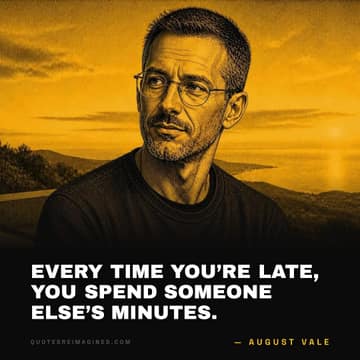
Everybody with whom the unpunctual man has to do is thrown from time to time into a state of fever: he is systematically late; regular only in his irregularity.
Economy requires neither superior courage nor eminent virtue; it is satisfied with ordinary energy, and the capacity of average minds.
Orderly men of moderate means have always something left in their pockets to help others; whereas your prodigal and careless fellows who spend all never find an opportunity for helping anybody.
Resist manfully, and the first decision will give strength for life; repeated, it will become a habit.
Money is power after its sort, it is true; but intelligence, public spirit, and moral virtue, are powers too, and far nobler ones.
Men who feel their strength within them need not fear to encounter adverse opinions; they have far greater reason to fear undue praise and too friendly criticism.
The good deed or word will live, even though we may not see it fructify, but so will the bad; and no person is so insignificant as to be sure that his example will not do good on the one hand, or evil on the other.
It is in misfortune that the character of the upright man shines forth with the greatest lustre; and when all else fails, he takes stand upon his integrity and his courage.
Facility comes by labour. Nothing seems easy, not even walking, that was not difficult at first.
Certain it is that no bread eaten by man is so sweet as that earned by his own labour, whether bodily or mental.
THE greatest results in life are usually attained by simple means, and the exercise of ordinary qualities.
It is the mind that sees as well as the eye.
It is not accident, then, that helps a man in the world so much as purpose and persistent industry.
With perseverance, the very odds and ends of time may be worked up into results of the greatest value.