Niccolò Machiavelli
Statesman · 1469–1527Florentine diplomat and writer whose The Prince described how power is actually won and kept, not how it ought to be.





































































Niccolò Machiavelli
Statesman · 1469–1527 · Author of The Prince
Florentine diplomat and writer whose The Prince described how power is actually won and kept, not how it ought to be.
- Quotes
- 30
- Vale lines
- 74
Reimagined by August Vale
74 new lines Vale wrote after Machiavelli and another thinker. Tap one to see both originals.
Pull bad news fast, like a tooth. Pour good news slowly, like wine.
Luck holds half the cards. Play your half like it’s the whole deck.
Punish the messenger once and every message after is good news.
If you need a win this week, find a smaller game, not a dirtier one.
Enjoy your luck like a rental. Build like it’s due back Monday.
Wanting more is human. Wanting it at any price is how you end up paying one.
Luck is a terrible business partner. It never shows up to the hard meetings.
Not every loss is a lesson. Some are just weather. Don’t spend a year interrogating the rain.
Every map is older than the road it describes. Look up now and then.
Study your heroes closely enough to find their mistakes. That’s where your own work begins.
A good apprentice learns the master’s habits. A great one learns the master’s doubts.
People do their best work for someone who can tell the difference.
Need a ride everywhere and you’ll learn the exact length of everyone else’s errands.
Rule a house by fear and you get quiet kids and empty chairs at every holiday.
Childhood is built from a thousand ordinary Saturdays, not one big holiday.
The in-law you were warned about is often the first one to show up when it counts.
Kindness works like rain. A flood runs off. A steady drizzle grows things.
Fix the drip on Tuesday and you never meet the ceiling on Friday.
Every nod in the meeting that turns into a shrug in the hallway is a small mutiny.
On the worst day, the boss should be the easiest person to find.
Every broken place still has one person holding it together. Find them first.
You can climb by betraying friends. You just won’t have anyone to enjoy the view with.
A boss who sends someone else to deliver the bad news has delivered a second piece of it.
Make it safe for the quietest voice in the room to stop you.
Few of us think of the good idea first. All of us can recognize it when it walks in.
Outgrowing a teacher is the best grade they’ll ever give you.
Give quietly enough and you’ll get a reputation for being cheap. Wear it.
We grow fonder of the people we help than of the people who help us.
A small mercy at the right moment beats a big gift at the wrong one.
Win like you’ll see them again. Lose like you’ll play again.
The best bosses collect talent the way other people collect trophies.
Every promotion comes with fewer people willing to tell you the truth.
Hiring is the one decision that keeps making decisions after you leave the room.
Problems are small when you’re close enough to see them hatch.
You can’t schedule the wave. You can only be in the water when it comes.
Plant in the season you’ve got, not the one you were promised.
Believe slowly and forgive quickly. Most people do it the other way round.
Forgiveness is a gift. Trust is a loan. Don’t mix up the paperwork.
Every con artist leaves a bill for the next honest stranger.
A promise to your team is a check. Bounce one and they start asking for cash.
Praise is sunlight. The team grows toward wherever you shine it.
The dull decision that buys a year beats the brilliant one that bets it.
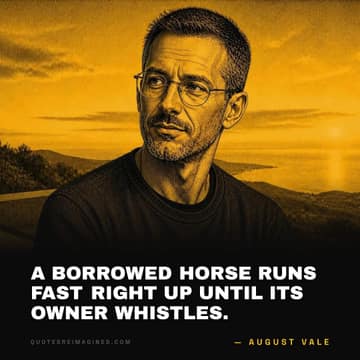
A borrowed horse runs fast right up until its owner whistles.
Luck runs half of the outcome. Your spending is in the other half.
In Machiavelli’s own words
Nevertheless, not to extinguish our free will, I hold it to be true that Fortune is the arbiter of one-half of our actions, but that she still leaves us to direct the other half, or perhaps a little less.
Yet it cannot be called talent to slay fellow-citizens, to deceive friends, to be without faith, without mercy, without religion; such methods may gain empire, but not glory.
For injuries ought to be done all at one time, so that, being tasted less, they offend less; benefits ought to be given little by little, so that the flavour of them may last longer.
The Prince27 quotes
A wise man ought always to follow the paths beaten by great men, and to imitate those who have been supreme, so that if his ability does not equal theirs, at least it will savour of it.
Nevertheless, he who has relied least on fortune is established the strongest.
Because there is no other way of guarding oneself from flatterers except letting men understand that to tell you the truth does not offend you; but when every one may tell you the truth, respect for you abates.
Princes, especially new ones, have found more fidelity and assistance in those men who in the beginning of their rule were distrusted than among those who in the beginning were trusted.
For men injure either from fear or hatred.
For it is the nature of men to be bound by the benefits they confer as much as by those they receive.
Nothing makes a prince so much esteemed as great enterprises and setting a fine example.
Victories after all are never so complete that the victor must not show some regard, especially to justice.
The wish to acquire is in truth very natural and common, and men always do so when they can, and for this they will be praised not blamed; but when they cannot do so, yet wish to do so by any means, then there is folly and blame.
God is not willing to do everything, and thus take away our free will and that share of glory which belongs to us.
In conclusion, the arms of others either fall from your back, or they weigh you down, or they bind you fast.
Each of the counsellors will think of his own interests, and the prince will not know how to control them or to see through them. And they are not to be found otherwise, because men will always prove untrue to you unless they are kept honest by constraint.
Nevertheless he ought to be slow to believe and to act, nor should he himself show fear, but proceed in a temperate manner with prudence and humanity, so that too much confidence may not make him incautious and too much distrust render him intolerable.
Upon this a question arises: whether it be better to be loved than feared or feared than loved?
It may be answered that one should wish to be both, but, because it is difficult to unite them in one person, it is much safer to be feared than loved, when, of the two, either must be dispensed with.
From this one can draw another important conclusion, that princes ought to leave affairs of reproach to the management of others, and keep those of grace in their own hands.
Because, if one is on the spot, disorders are seen as they spring up, and one can quickly remedy them; but if one is not at hand, they are heard of only when they are great, and then one can no longer remedy them.
You must know there are two ways of contesting, the one by the law, the other by force; the first method is proper to men, the second to beasts; but because the first is frequently not sufficient, it is necessary to have recourse to the second.
Because there are three classes of intellects: one which comprehends by itself; another which appreciates what others comprehended; and a third which neither comprehends by itself nor by the showing of others; the first is the most excellent, the second is good, the third is useless.
I believe also that he will be successful who directs his actions according to the spirit of the times, and that he whose actions do not accord with the times will not be successful.
Nevertheless, liberality exercised in a way that does not bring you the reputation for it, injures you; for if one exercises it honestly and as it should be exercised, it may not become known, and you will not avoid the reproach of its opposite.
A prince, therefore, being compelled knowingly to adopt the beast, ought to choose the fox and the lion; because the lion cannot defend himself against snares and the fox cannot defend himself against wolves.
We have not seen great things done in our time except by those who have been considered mean; the rest have failed.
Every one admits how praiseworthy it is in a prince to keep faith, and to live with integrity and not with craft.
The choice of servants is of no little importance to a prince, and they are good or not according to the discrimination of the prince.
Nevertheless our experience has been that those princes who have done great things have held good faith of little account, and have known how to circumvent the intellect of men by craft, and in the end have overcome those who have relied on their word.
A prince ought also to show himself a patron of ability, and to honour the proficient in every art.