Arthur Schopenhauer
Philosopher · 1788–1860German philosopher known for his pessimism and his clear, practical essays on how to live, collected as The Wisdom of Life and Counsels and Maxims.




























































Arthur Schopenhauer
Philosopher · 1788–1860 · German philosopher of the will
German philosopher known for his pessimism and his clear, practical essays on how to live, collected as The Wisdom of Life and Counsels and Maxims.
- Quotes
- 80
- Vale lines
- 138
Reimagined by August Vale
138 new lines Vale wrote after Schopenhauer and another thinker. Tap one to see both originals.
A sick billionaire would trade it all for your morning walk.
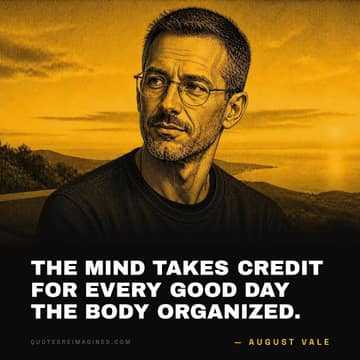
The mind takes credit for every good day the body organized.
If you’re healthy enough to be bored, you’re richer than you feel.
Freedom is the only thing money buys that never needs dusting.
Paying to save time only works if you spend the time on something.
The man who brags about a bargain usually overpaid for the story.
Count down to every Friday and you’ve wished away most of the year.
More chess games are lost to the clock than to the opponent. Lives too.
Children aren’t masters of the present. They just haven’t learned to leave it yet.
Nobody saves an ice cream cone for later. Treat a good afternoon the same way.
Keep a list of the disasters that never showed up. It will outgrow every other list.
A good name is like clean glass. Nobody notices it until there’s a crack.
Reputation is a lease. Every job either renews it or ends it.
Being good is the job. Being known is a second job. Don’t let it eat the first.
Every need you hand to someone else comes with a copy of your keys.
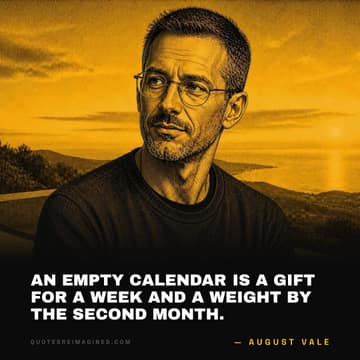
An empty calendar is a gift for a week and a weight by the second month.
An inner life is central heating. Everything else is a nice coat.
Everyone at the top table is quietly checking who’s at the next one up.
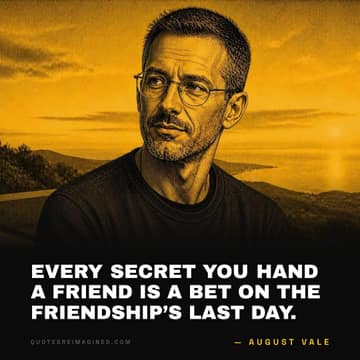
Every secret you hand a friend is a bet on the friendship’s last day.
Don’t judge a partner by their best mood. Marry the bad one you can live with.
Before the proposal, survive one road trip, one stomach bug and one tax return together.
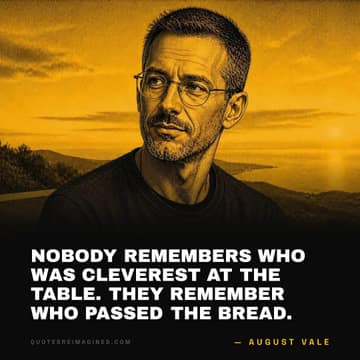
Nobody remembers who was cleverest at the table. They remember who passed the bread.
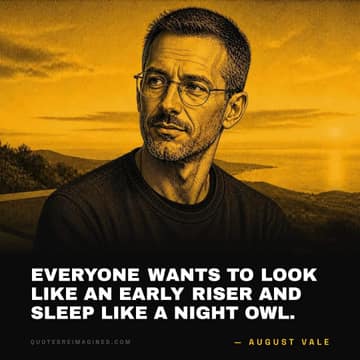
Everyone wants to look like an early riser and sleep like a night owl.
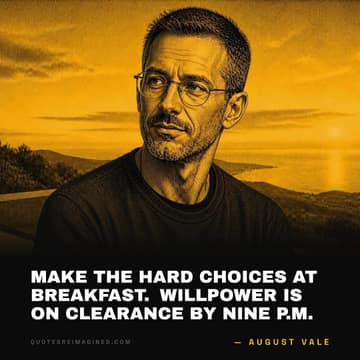
Make the hard choices at breakfast. Willpower is on clearance by nine p.m.
Cheerfulness needs no reason, which is why it works on the days that have none.
Sore legs are a complaint plenty of people would give anything to have.
Get the morning light. Tonight’s sleep is decided at breakfast.
Your bed is the best salesman you’ll ever meet. Don’t take the meeting.
Health is the background music. You only notice it when it stops.
Old age is a long conversation with yourself. Have something to say by then.
Your wish list would take three lifetimes. Cross off two of them.
Age is the one climb where the view improves as the legs give out.
Losing your temper is announcing you’ve run out of better tools.
Want to know someone? Watch them lose, wait, and split a bill.
Every clever put-down is a loan against someone’s goodwill, at a terrible rate.
The more someone needs to hit back, the less sure they are of what they’re defending.
Small irritations are a luxury. Real trouble never has time for them.
Learning something new is the one pleasure with no hangover.
Life rarely pays out in joy. It pays in understanding, which keeps longer.
Solve a problem and you don’t get an empty desk. You get a better problem.
When the whole world looks gray, clean your glasses before you repaint it.
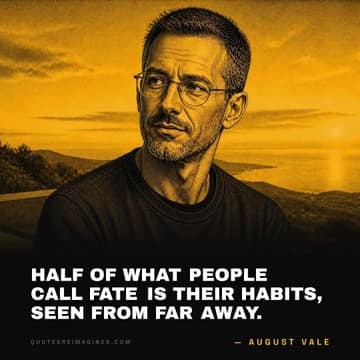
Half of what people call fate is their habits, seen from far away.
You trust your own judgment on everything except your worth. That one you outsource.
The darkest opinions about life are usually written in comfortable chairs.
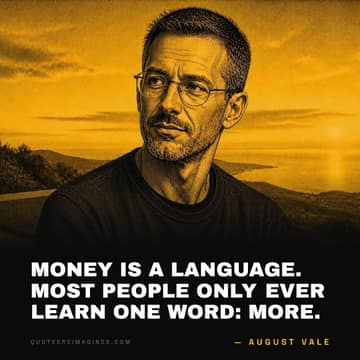
Money is a language. Most people only ever learn one word: more.
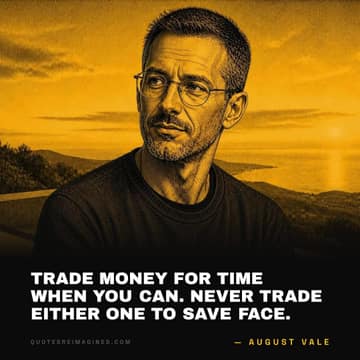
Trade money for time when you can. Never trade either one to save face.
The freest person in any room is the one with nothing to prove there.
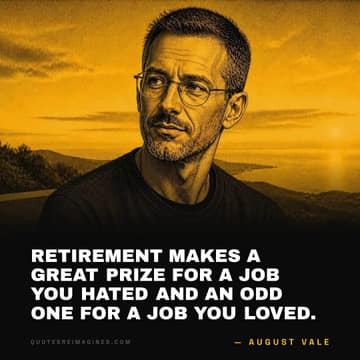
Retirement makes a great prize for a job you hated and an odd one for a job you loved.
A full fridge with nothing to eat is the whole problem with more.
Your reputation gets to the meeting ten minutes before you do.
People don’t want more tools. They want a reason to pick one up.
Chase the prize. Miss it, and you still come home with an education.
A reputation bigger than your work is a loan. Someday it gets called.
Fame is how many people know your name. Reputation is how many would lend you their car.
Water looks like nothing is happening right up until it boils.
Half-hearted work always has a taste. Customers notice first.
Every life looks long from the start line and short from the finish.
Teach a child to sit with boredom and you’ve given them company for life.
Routine makes the years fly. Only new things slow them down.
Your inbox will still be full at your funeral. Answer accordingly.
Live in the moment, not for it. The second one runs up a tab.
Youth admires the tapestry. Age gets to turn it over and see how it was tied.
Sand falls at the same speed the whole time. It only looks faster when there’s less left.
You don’t get a lifetime. You get a morning, renewed until further notice.
Some books can only be read at forty, no matter how early you start them.
Leisure isn’t the absence of work. It’s the presence of yourself.
Solitude tunes the instrument. Other people are the concert.
If an hour alone with yourself feels long, that’s the friendship to work on first.
Teenagers think they’re immortal. Adults act like it. Only one of them has an excuse.
Paper never interrupts. That’s why you find out what you think there.
Nobody can do your dying for you. So why let anyone do your living?
Walk alone for a while and you’ll find out how few things you actually wanted.
The best part of getting old is running out of people to impress.
Every morning is a small birthday, and most of us never unwrap it.
Thank whoever told you. Everyone else just let you walk around like that.
A secret you share to get closer is one somebody else will share to get closer.
Every dollar spent on looking successful is borrowed from being it.
You can’t control inflation in prices. You can control inflation in wants.
Learn to rest before you can afford to. The skill doesn’t come with the money.
Turn every hobby into a side hustle and you’ll run out of places to rest.
If the furniture makes you feel important, the furniture is in charge.
A cheerful temper is the only insurance that pays out on every kind of loss.
After health, the best thing money buys is not having to think about money.
A thief can take your things. Envy takes your enjoyment of them.
Most people spend their free hours. A few invest them, and that’s the whole gap.
A bad year sorts what you bought for yourself from what you bought for an audience.
No salary is high enough for someone who’s decided to be unhappy.
In Schopenhauer’s own words
The man who is cheerful and merry has always a good reason for being so,—the fact, namely, that he is so. There is nothing which, like this quality, can so completely replace the loss of every other blessing.
Each day is a little life: every waking and rising a little birth, every fresh morning a little youth, every going to rest and sleep a little death.
Intellect is invisible to the man who has none.
A man can be himself only so long as he is alone; and if he does not love solitude, he will not love freedom; for it is only when he is alone that he is really free.
A man shows his character just in the way in which he deals with trifles,—for then he is off his guard.
For the safest way of not being very miserable is not to expect to be very happy.
Riches, one may say, are like sea-water; the more you drink the thirstier you become; and the same is true of fame.
Health outweighs all other blessings so much that one may really say that a healthy beggar is happier than an ailing king.
The Wisdom of Life27 quotes
With health, everything is a source of pleasure; without it, nothing else, whatever it may be, is enjoyable; even the other personal blessings,—a great mind, a happy temperament—are degraded and dwarfed for want of it.
A good, temperate, gentle character can be happy in needy circumstances, whilst a covetous, envious and malicious man, even if he be the richest in the world, goes miserable.
It is the possession of a great heart or a great head, and not the mere fame of it, which is worth having, and conducive to happiness. Not fame, but that which deserves to be famous, is what a man should hold in esteem.
What a man has in himself is, then, the chief element in his happiness.
To a man possessed of an ill-conditioned individuality, all pleasure is like delicate wine in a mouth made bitter with gall.
The most general survey shows us that the two foes of human happiness are pain and boredom.
Himself is the source of the best and most a man can be or achieve. The more this is so—the more a man finds his sources of pleasure in himself—the happier he will be.
It is only work done from the heart that ever gains the laurel.
True, if quality of intellect could be made up for by quantity, it might be worth while to live even in the great world; but unfortunately, a hundred fools together will not make one wise man.
Ordinary people think merely how they shall spend their time; a man of any talent tries to use it.
A man never feels the loss of things which it never occurs to him to ask for; he is just as happy without them; whilst another, who may have a hundred times as much, feels miserable because he has not got the one thing he wants.
The man who seeks to do what is good and genuine, must avoid what is bad, and be ready to defy the opinions of the mob, nay, even to despise it and its misleaders.
We have already seen, in general, that what a man is contributes much more to his happiness than what he has, or how he is regarded by others.
Because people have no thoughts to deal in, they deal cards, and try and win one another's money.
Fate is cruel, and mankind is pitiable. In such a world as this, a man who is rich in himself is like a bright, warm, happy room at Christmastide, while without are the frost and snow of a December night.
It is a great piece of folly to sacrifice the inner for the outer man, to give the whole or the greater part of one's quiet, leisure and independence for splendor, rank, pomp, titles and honor.
The world in which a man lives shapes itself chiefly by the way in which he looks at it, and so it proves different to different men; to one it is barren, dull, and superficial; to another rich, interesting, and full of meaning.
What one human being can be to another is not a very great deal: in the end every one stands alone, and the important thing is who it is that stands alone.
Fame is something which must be won; honor, only something which must not be lost.
As a general rule, the longer a man's fame is likely to last, the later it will be in coming; for all excellent products require time for their development.
Even trees must be shaken by the wind, if they are to thrive.
It is not what things are objectively and in themselves, but what they are for us, in our way of looking at them, that makes us happy or the reverse.
For one's choice in this world does not go much beyond solitude on one side and vulgarity on the other.
Since, then, leisure is the flower, or rather the fruit, of existence, as it puts a man into possession of himself, those are happy indeed who possess something real in themselves.
Pride in every form, point d'honneur and punctilio, however varied their kind or sphere, are at bottom nothing but this—anxiety about what others will say—and what sacrifices it costs!
A man must himself have but a poor opinion of his own worth who hastens to prevent the utterance of an unfavorable opinion by giving his enemy a black eye.
For, after all, the foundation of our whole nature, and, therefore, of our happiness, is our physique, and the most essential factor in happiness is health, and, next in importance after health, the ability to maintain ourselves in independence and freedom from care.
Counsels and Maxims45 quotes
Even in the case of evils which are sure to happen, the time at which they will happen is uncertain. A man who is always preparing for either class of evil will not have a moment of peace left him.
Give way neither to love nor to hate, is one-half of worldly wisdom: say nothing and believe nothing, the other half.
Rascals are always sociable—more's the pity! and the chief sign that a man has any nobility in his character is the little pleasure he takes in others' company.
It should never be forgotten that misfortune, be it great or small, is the element in which we live.
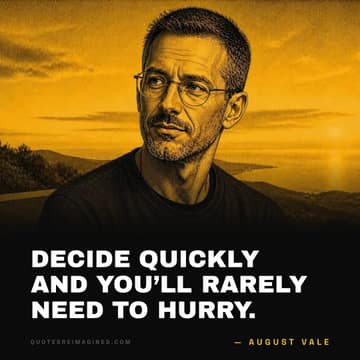
The most finished man of the world would be one who was never irresolute and never in a hurry.
For it may be said, in general, that every man will love or hate solitude—in other Words, his own society—just in proportion as he is worth anything in himself.
Let your enemies' censure be like a bitter medicine, to be used as a means of self-knowledge.
Do not tell a friend anything that you would conceal from an enemy.
Death is the great reservoir of Life.
The happiest lot is not to have experienced the keenest delights or the greatest pleasures, but to have brought life to a close without any very great pain, bodily or mental.
It is a source of consolation to look back upon those great misfortunes which never happened.
To see how short life is, a man must have grown old, that is to say, he must have lived long.
The progress of life shows a man the stuff of which he is made.
As manhood approaches, boredom disappears; and old men find the time too short when their days fly past them like arrows from a bow.
Peace of mind! that is something essential to any enjoyment of the present moment; and unless its separate moments are enjoyed, there is an end of life's happiness as a whole. We should always collect that To-day comes only once, and never returns.
The young should early be trained to bear being left alone; for it is a source of happiness and peace of mind.
Let everyone, then, do something, according to the measure of his capacities. To have no regular work, no set sphere of activity—what a miserable thing it is!
The chief result gained by experience of life is clearness of view.
The more a man has in himself, the less others can be to him.
Really good society is everywhere of necessity very small. In brilliant festivals and noisy entertainments, there is always, at bottom, a sense of emptiness prevalent.
To make extensive preparations for life—no matter what form they may take—is one of the greatest and commonest of follies.
We are apt to forget that every day is an integral, and therefore irreplaceable portion of life, and to look upon life as though it were a collective idea or name which does not suffer if one of the individuals it covers is destroyed.
Peace of mind is impossible without a considerable amount of solitude.
To be alone is the fate of all great minds—a fate deplored at times, but still always chosen as the less grievous of two evils.
Do not shorten the morning by getting up late, or waste it in unworthy occupations or in talk; look upon it as the quintessence of life, as to a certain extent sacred.
Activity!—doing something, if possible creating something, at any rate learning something—how fortunate it is that men cannot exist without that!
Effort, struggles with difficulties! that is as natural to a man as grubbing in the ground is to a mole.
Great minds are like eagles, and build their nest in some lofty solitude.
The only way to attain superiority in dealing with men, is to let it be seen that you are independent of them.
A friend in need, as the saying goes, is rare.
To combine politeness with pride is a masterpiece of wisdom.
Even when you are fully justified in praising yourself, you should never be seduced into doing so.
From the point of view we have been taking up until now, life may be compared to a piece of embroidery, of which, during the first half of his time, a man gets a sight of the right side, and during the second half, of the wrong.
Towards the close of life, much the same thing happens as at the end of a bal masqué—the masks are taken off.
To be irritated by trifles, a man must be well off; for in misfortunes trifles are unfelt.
Many live too long in the present—frivolous people, I mean; others, too much in the future, ever anxious and full of care.
It is a wise thing to be polite; consequently, it is a stupid thing to be rude.
The cheerfulness and vivacity of youth are partly due to the fact that, when we are ascending the hill of life, death is not visible: it lies down at the bottom of the other side.
We cram the years so full of projects that if we were to try and carry them all out, death would come prematurely though we reached the age of Methuselah.
What people commonly call Fate is, as a general rule, nothing but their own stupid and foolish conduct.
Instead of finding, as we expected, pleasure, happiness, joy, we get experience, insight, knowledge—a real and permanent blessing, instead of a fleeting and illusory one.
It would be a great advantage to a young man if his early training could eradicate the idea that the world has a great deal to offer him.
If the chief feature of the earlier half of life is a never-satisfied longing after happiness, the later half is characterized by the dread of misfortune.
The fool rushes after the pleasures of life and finds himself their dupe; the wise man avoids its evils; and even if, notwithstanding his precautions, he falls into misfortunes, that is the fault of fate, not of his own folly.
A man should act in accordance with his own character, as soon as he has carefully deliberated on what he is about to do.