Paul Kalanithi
Neurosurgeon and writer · 1977–2015Paul Kalanithi was an American neurosurgeon at Stanford who was diagnosed with stage IV lung cancer during his final year of residency. His essays on mortality and his posthumous memoir When Breath Becomes Air were widely read.

Paul Kalanithi
Neurosurgeon and writer · 1977–2015 · Author of When Breath Becomes Air
Paul Kalanithi was an American neurosurgeon at Stanford who was diagnosed with stage IV lung cancer during his final year of residency. His essays on mortality and his posthumous memoir When Breath Becomes Air were widely read.
- Quotes
- 16
- Vale lines
- 61
Reimagined by August Vale
61 new lines Vale wrote after Paul Kalanithi and another thinker. Tap one to see both originals.
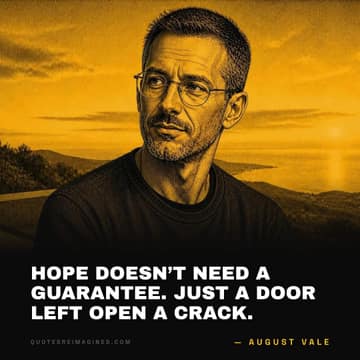
Hope doesn’t need a guarantee. Just a door left open a crack.
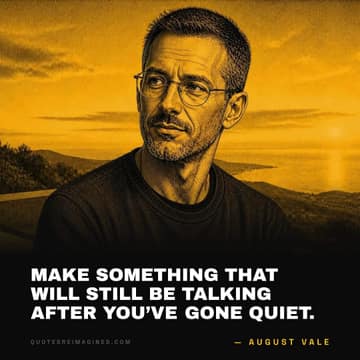
Make something that will still be talking after you’ve gone quiet.
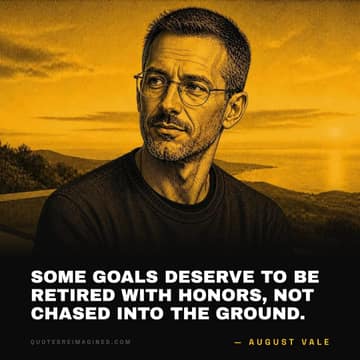
Some goals deserve to be retired with honors, not chased into the ground.
Search your symptoms at midnight and you’ll find a dozen diseases and no sleep.
The most trustworthy words a doctor can say are: I don’t know yet.
With a chronic illness, a good day isn’t a given. It’s a budget. Spend it on people.
Choose the doctor who tells you the hard number. Comfort is easy to find. Honesty isn’t.
Count your aches all day and you’ll miss what your body can still do.
Good accounting won’t fix bad values. It just makes them easier to read.
A comeback is mostly paperwork: calls returned, debts paid, one honest day after another.
Most second acts are written by people who stopped waiting for the first act to come back.
Enough never knocks loudly. You have to be listening for it.
The best inheritance is a parent who seemed happy with very little.
A baby can’t do a single thing and is still the best visitor a hospital ever gets.
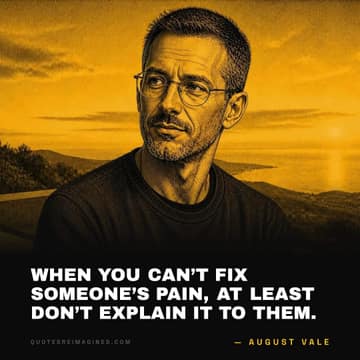
When you can’t fix someone’s pain, at least don’t explain it to them.
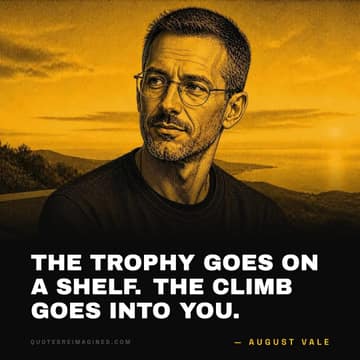
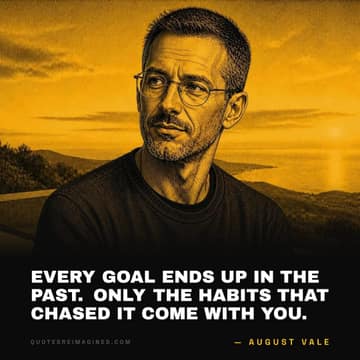
Every goal ends up in the past. Only the habits that chased it come with you.
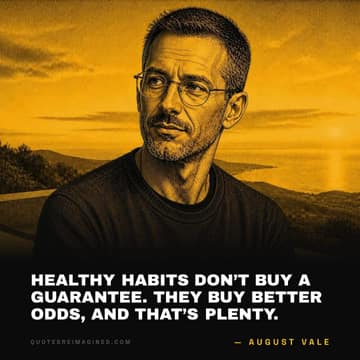
Healthy habits don’t buy a guarantee. They buy better odds, and that’s plenty.
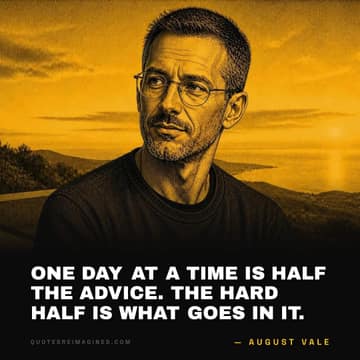
One day at a time is half the advice. The hard half is what goes in it.
The numbers know how many. They never know which one is you.
Every day sits between two storms. Enjoy the weather you’re in.
Only the living get to change their minds. Don’t waste the privilege.
A harsh word to a child can outlive you by sixty years. So can a kind one.
Every player loses the last point. The good ones never let that spoil the match.
Children double every joy and every worry. Nobody asks for a refund.
Read the bad news all the way through. Then leave a light on.
Chase someone you’ll never catch. It’s the only race that never ends early.
Beginnings are exciting and endings are proud. The middle is where the job lives.
Talent gets you noticed. A tolerance for boredom gets you paid.
Death is the least surprising thing that will ever happen to you. Only the date is news.
Every ambition ends up in the past tense. Enjoy it while it’s still a verb.
Every day moves you away from something and toward something else. Choose which one you watch.
Ink outlasts the hand by centuries. Write down what you learned.
You were born with one appointment already booked. The rest of the calendar is yours.
Teach someone well and you’ll still be working long after you’ve stopped.
Midlife isn’t a crisis. It’s the first time you can see both ends of the road.
Nobody gets out alive, so stop trying to get out unscratched.
The sick and the very old live by the hour. They know exactly what one is worth.
Counting the days you have left is a sure way to spend them counting.
Doctors can estimate how long. Only you can answer what for.
Patience with a guarantee is just waiting. The real kind doesn’t know the ending.
Someday someone will scroll back through your messages. Leave a few worth finding.
Nobody can do your dying for you. So why let anyone do your living?
Death has taught more philosophy than every classroom combined.
Some days the only goal is to still be standing at sunset. That counts.
Most people can handle the truth. What they can’t handle is learning you decided they couldn’t.
An heirloom is worth exactly as much as the stories that come with it.
In Paul Kalanithi’s own words
I began to realize that coming face to face with my own mortality, in a sense, had changed both nothing and everything.
What patients seek is not scientific knowledge doctors hide, but existential authenticity each must find on her own.
How Long Have I Got Left? (The New York Times)8 quotes
Be honest about the prognosis but always leave some room for hope.
It’s impossible, irresponsible even, to be more precise than you can be accurate.
In a way, though, the certainty of death was easier than this uncertain life.
The pedestrian truth that you live one day at a time didn’t help: What was I supposed to do with that day?
The fact of death is unsettling. Yet there is no other way to live.
Faced with mortality, scientific knowledge can provide only an ounce of certainty: Yes, you will die. But one wants a full pound of certainty, and that is not on offer.
Getting too deep into statistics is like trying to quench a thirst with salty water. The angst of facing mortality has no remedy in probability.
I’m writing more, seeing more, feeling more.
Before I Go (Stanford Medicine magazine)6 quotes
Time for me is double-edged: Every day brings me further from the low of my last cancer relapse, but every day also brings me closer to the next cancer recurrence — and eventually, death.
I plod, I ponder, some days I simply persist.
Everyone succumbs to finitude.
Most ambitions are either achieved or abandoned; either way, they belong to the past.
Words have a longevity I do not.
That message is simple: When you come to one of the many moments in life when you must give an account of yourself, provide a ledger of what you have been, and done, and meant to the world, do not, I pray, discount that you filled a dying man’s days with a sated joy, a joy unknown to me in all my prior years, a joy that does not hunger for more and more, but rests, satisfied.