Oliver Sacks
Neurologist and writer · 1933–2015Oliver Sacks was a British-born neurologist who practised in New York and wrote case histories for a general readership. After learning in 2015 that his cancer had spread, he wrote a series of essays on dying for The New York Times.

Oliver Sacks
Neurologist and writer · 1933–2015 · Author of Awakenings and The Man Who Mistook His Wife for a Hat
Oliver Sacks was a British-born neurologist who practised in New York and wrote case histories for a general readership. After learning in 2015 that his cancer had spread, he wrote a series of essays on dying for The New York Times.
- Quotes
- 16
- Vale lines
- 67
Reimagined by August Vale
67 new lines Vale wrote after Oliver Sacks and another thinker. Tap one to see both originals.
Sometimes a head cold cancels the plans you didn’t have the nerve to.
Some days the whole achievement is noticing that it was a good one.
Rest isn’t the prize at the end of the week. It’s a seventh of the design.
Some people spend whole decades on hold, humming along to the music.
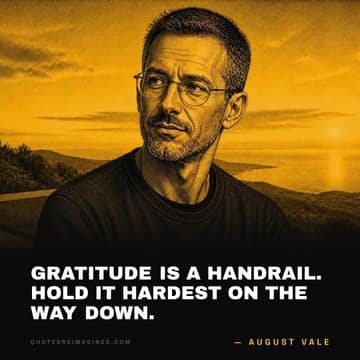
Gratitude is noticing the present before it turns into the past.
After a fall, the crowd leaves. Enjoy the privacy. It’s the best place to rebuild.
Give a little before you have enough, or you’ll never recognize enough when it shows up.
A free afternoon is only wasted if you spend it proving you deserved it.
Generosity is the quickest way to find out how much you actually have.
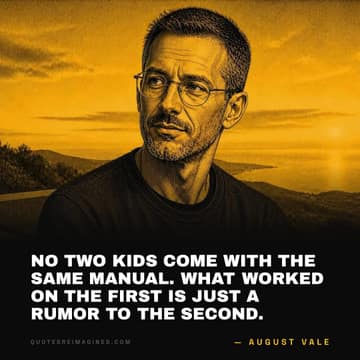
No two kids come with the same manual. What worked on the first is just a rumor to the second.
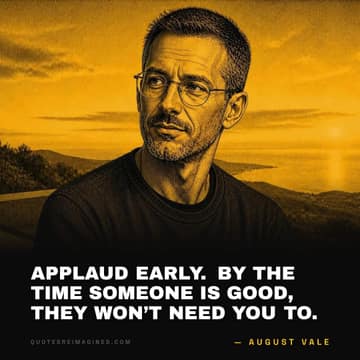
Applaud early. By the time someone is good, they won’t need you to.
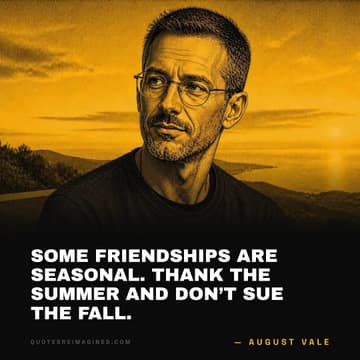
Some friendships are seasonal. Thank the summer and don’t sue the fall.
Procrastination looks harmless counted in days. Try counting it in years.
A hard diagnosis edits a life in an afternoon. You’re allowed to do it sooner.
Twenty minutes makes a focused workout. Two hours is a social visit with some weights.
Up close, a life looks like errands. From high enough, you can see the road.
Near the end, the big questions shrink to the size of a kitchen table.
If tonight were the last page, would it at least be in your handwriting?
Old age is a new job. Show up like a new hire: curious and a little early.
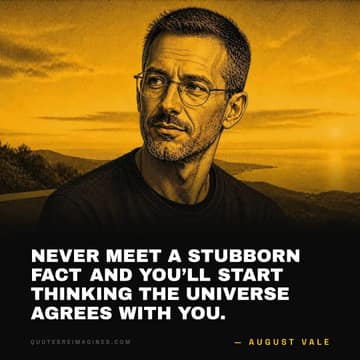
Never meet a stubborn fact and you’ll start thinking the universe agrees with you.
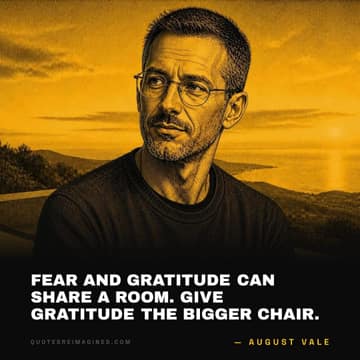
Fear and gratitude can share a room. Give gratitude the bigger chair.
Freedom is having somewhere to go and nowhere you have to be.
Your faults get you into the club. Your virtues put your name on the door.
Fame tells you what people noticed. It doesn’t tell you what mattered.
Real work survives without applause. That’s how you know it’s yours.
Near the end, people stop counting what they lost and start counting what they got.
Age should make you braver. There’s less runway left to protect.
Live one day on purpose. It will show you how many you didn’t.
Youth admires the tapestry. Age gets to turn it over and see how it was tied.
Stop asking your forties to impersonate your twenties. They have better material.
Of all the centuries on offer, you got this one. Don’t spend it complaining about the seat.
You can photograph a sunset. You can only keep it by watching.
Stand next to a mountain for an hour. Your deadline shrinks to its real size.
Midlife isn’t a crisis. It’s the first time you can see both ends of the road.
Old age hands you the answers right around the time nobody asks the questions.
Death proves every life is a short story. Write it with no filler.
Life is short and you’re still complicated. One of those can change.
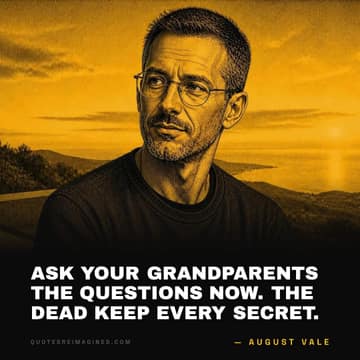
Ask your grandparents the questions now. The dead keep every secret.
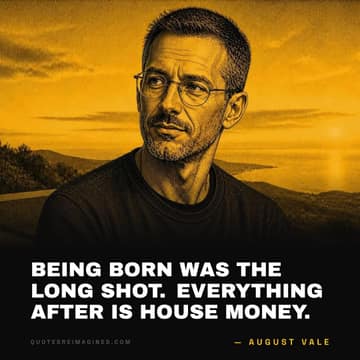
Being born was the long shot. Everything after is house money.
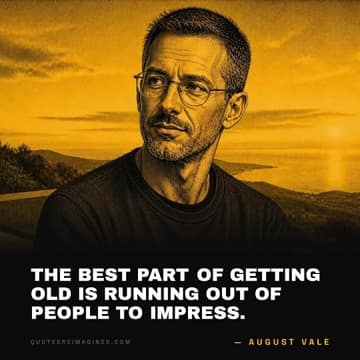
The best part of getting old is running out of people to impress.
There will never be another you. That’s not a compliment. It’s a deadline.
Pretend the story already ended well. Everything after is an encore.
Lose an income for a month and you’ll learn your real budget in a week.
In Oliver Sacks’s own words
I cannot pretend I am without fear. But my predominant feeling is one of gratitude.
Above all, I have been a sentient being, a thinking animal, on this beautiful planet, and that in itself has been an enormous privilege and adventure.
I do not think of old age as an ever grimmer time that one must somehow endure and make the best of, but as a time of leisure and freedom, freed from the factitious urgencies of earlier days, free to explore whatever I wish, and to bind the thoughts and feelings of a lifetime together.
My Own Life (The New York Times)6 quotes
I have to live in the richest, deepest, most productive way I can.
Over the last few days, I have been able to see my life as from a great altitude, as a sort of landscape, and with a deepening sense of the connection of all its parts.
I feel a sudden clear focus and perspective. There is no time for anything inessential.
There will be no one like us when we are gone, but then there is no one like anyone else, ever.
When people die, they cannot be replaced. They leave holes that cannot be filled, for it is the fate — the genetic and neural fate — of every human being to be a unique individual, to find his own path, to live his own life, to die his own death.
I have loved and been loved; I have been given much and I have given something in return; I have read and traveled and thought and written.
The Joy of Old Age. (No Kidding.) (The New York Times)4 quotes
I often feel that life is about to begin, only to realize it is almost over.
He felt, as I begin to feel, not a shrinking but an enlargement of mental life and perspective.
One has seen grand theories rise, only to be toppled by stubborn facts.
One is more conscious of transience and, perhaps, of beauty.
Sabbath (The New York Times)3 quotes
I had discovered my vocation, and this I pursued doggedly, single-mindedly, with little encouragement from my colleagues.
And now, weak, short of breath, my once-firm muscles melted away by cancer, I find my thoughts, increasingly, not on the supernatural or spiritual, but on what is meant by living a good and worthwhile life — achieving a sense of peace within oneself.
I find my thoughts drifting to the Sabbath, the day of rest, the seventh day of the week, and perhaps the seventh day of one’s life as well, when one can feel that one’s work is done, and one may, in good conscience, rest.